In many discussions, hydrogen seems the ideal energy carrier: clean, flexible, applicable in industry and mobility, and ideally suited for storing renewable energy. But those who really step into the world of hydrogen discover a reality that is more complex and technical than many people expect. Behind the press releases, pilot projects and ambitious goals lies a daily practice in which design choices, materials, flow dynamics and human behavior make the difference between a robust system or a risky one.
 For this knowledge base article, we interviewed a field engineer who has been designing, testing and optimizing hydrogen systems for more than a decade. His insights are honest, sometimes critical, but mostly valuable to anyone involved in hydrogen projects.
First steps: curiosity, wonder and a new learning curve
Question: How did you get into the hydrogen world?
Answer:
"It actually started quite innocently. I had been working within gas and liquid systems for years and saw hydrogen popping up more and more often in customer requests. And one day I thought: there's something going on here. The technology, the safety, the innovation - this is exactly the kind of puzzle that makes me happy. From that moment on, I started to fully immerse myself in it." That step turned out to be the start of a long learning curve. A learning curve he says awaits every engineer once you start treating hydrogen seriously.
Question: What was the biggest learning curve in the beginning?
Answer:
"That hydrogen is really completely different from natural gas or nitrogen. Everything you're used to - flow, volume calculations, material selection, seals - works just a little differently. Even thermodynamic effects behave differently. You soon realize: I have to rethink my whole way of thinking."
TechTalk Hydrogen
 A half-hour technical presentation. In this video, an expert shares their knowledge on a specific topic, with numerous practical examples, applications, and advice.
Oversizing: the silent cost no one talks about
The conversation reveals that many designers unknowingly make wrong choices precisely because they are copying their experience with natural gas to hydrogen.
Question: What mistakes do you see most often in designs?
Answer:
"Over-dimensioning, without a doubt. Engineers often keep speeds too low because they fear erosion. But with hydrogen, erosion hardly plays a role. As a result, pipes are chosen far too large - and systems too expensive."
He continues:
"We work daily with customers who are shocked when we run through their line-size calculations. It's not that their calculations are bad - it's that they calculate as if they were still in the natural gas world."
Applying larger pipes results in higher costs. In addition, using more material leads to an increase in the number of joints, which increases the risk of leaks. A bulkier system also entails increased maintenance costs.
The most underestimated risk: humans
Our field engineer is careful to criticize, but clear on one subject:
Below are examples of errors found in practice:
- wrong tightening
- wrong tape
- contamination in piping
- insufficient cleanliness during installation
- Threaded connections that do not close
- no four-eye check
We work with the smallest known molecule, but the greatest source of measurement inaccuracy remains the most unpredictable variable in the entire system: humans.
To conclude part 1: the essence
This knowledge bank session makes one thing clear:
hydrogen is no hype, no simple technology and no obvious solution.
It is a field that requires curiosity, nuance and technical skill.
Where hydrogen will make a difference?
You'll find out in Part 2.
The journey of hydrogen 2 — From design to maintenance: how to build a reliable hydrogen system
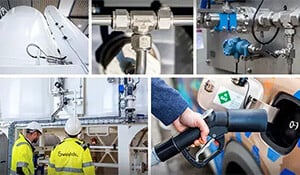
Top 5 Hydrogen Infrastructure Best Practices