Understanding modern gas distribution systems: part 2
This second in the series of knowledge bank sessions on modern gas distribution systems takes a closer look at the importance of good design and highlights which engineering choices really make the difference. Here we look not only at the technical aspects, but also at the practical consequences for safety, efficiency and future-proofing. You'll read how smart choices in system design - from centralized loop lines to decentralized cylinder arrangements - contribute to minimizing gas loss, increasing reliability and reducing operational risks. In addition, we address key issues around scalability, flexibility and integration with existing process plants. Using concrete examples and best practices, you will gain insight into how a well thought-out design can both save costs and ensure the continuity of your organization. Finally, we will discuss which interfaces and components deserve extra attention to prevent failures and inefficiencies so that your gas distribution system continues to function optimally - both today and in the future.
System design forms the basis for safe, efficient and future-proof gas distribution
Smart choices in system design lay the foundation for safe, efficient and future-proof gas distribution. From central pipelines to decentralized cylinder arrangements, each design has its own challenges and risks. Want to know how to combine scalability, flexibility and reliability in a system that perfectly suits your organization? Read on and gain insight into the trade-offs that make the difference between routine and innovation!
How to choose between a centralized and a decentralized system?
How the system is constructed depends on what is already in place and gas consumption. Many buildings have a central loop system, but whether it provides sufficient purity and functionality must be considered on a situation-by-situation basis. Specialty gases are often controlled locally because it is expensive to maintain pressure everywhere. For bulk gases such as nitrogen, central distribution is usually most practical.
What are the risks of decentralized cylinder arrangements?
The use of individual gas cylinders or gas cylinders can lead to safety problems, such as unwanted spread of hazardous gases in a building. Therefore, safety should always be coordinated centrally, even when decentralized solutions are necessary.
How does scalability affect design?
Scalability plays a major role in system design. The choice between central and decentralized solutions is determined by several factors, including the amount of gas required, the desired reliability of the system and the layout of the building. Decentralized systems are chosen for valuable or sensitive gases to reduce losses and costs.
How are pressure stages and redundancy designed?
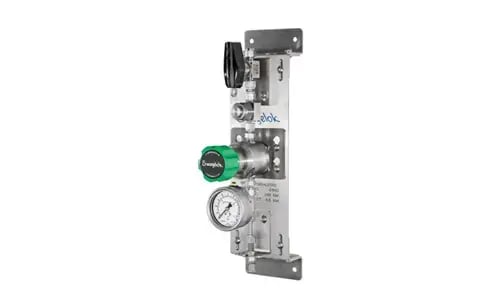
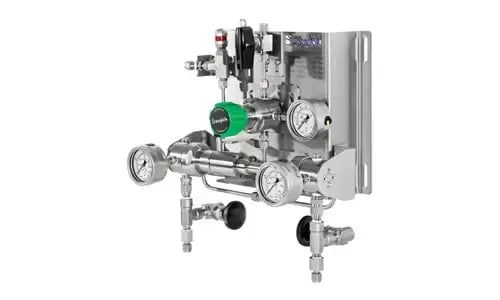
The goal is to ensure that end users can continue uninterrupted operations. This may require pressure reduction to be applied in several stages, depending on the pressure required at the workplace level. In many cases, point-of-use panels are deployed to ensure the desired flexibility and accuracy.
When is automatic change over necessary?
When continuous availability is required, the system automatically switches over so that users do not have to act when a particular resource is depleted. While this is somewhat at the expense of efficiency, the increase in reliability prevails under these conditions.
How does one deal with pressure instability?
Pressure instability is mitigated by positioning treatments as close to the end user as possible. In this way, the effects of variations within the network are minimized. A stable main pressure level and possibly automatic switching support this process.
How do gas distribution systems integrate with existing process plants?
Because process streams are often difficult to predict in terms of purity and concentration, this is usually difficult. For safety and reliability reasons, distribution flows are usually kept separate from process gas flows, and often use separate sources.
Which interfaces cause the most problems?
A major concern is the transition from the general supply to the internal network. Poor connections can cause leaks, which can be recognized, for example, by ice formation. Problems and incidents also arise from uneven connections at endpoints.
What are lessons learned from brownfield projects?
It is advisable to pay attention to standardization and specification early in the process. If this is postponed to a later stage, there is a risk that end users will have to make changes after delivery, which can result in additional time investments and costs.
"A future-proof gas distribution system is created when simplicity, safety and smart design reinforce each other."
Swagelok Netherlands
Sales Engineer
Thoughtful design and engineering are the basis for a safe and future-proof gas distribution system.
A solid gas distribution system starts with thoughtful design principles and considered engineering choices. Whether centralized or decentralized, every system requires a trade-off between safety, reliability, scalability and efficiency. In this section, we highlight essential design principles that not only contribute to a safe and sustainable infrastructure, but also address future expansion and changing user needs. You'll read which engineering choices make the difference, how standardization and simplicity ensure a robust system, and what to look out for to avoid operational problems. This will help you lay a solid foundation for a future-proof gas supply with smart design decisions.
What are best practices for safe and future-proof gas distribution systems?
Keep systems as simple as possible. Complexity leads to end-user errors, higher maintenance costs and increased likelihood of anomalous practices. Standardization and simplicity make for durable, reliable and low-maintenance systems.
What design principles are universally applicable?
Safety is always central. Important choices include whether an end user should be able to control the pressure themselves. Or is that actually unsafe? Another choice has to do with whether valves will be operated manually or activated automatically. These choices determine the ease of use, safety, maintenance requirements and cost structure of the system.
How do specialty gases differ from standard industrial gases?
Technically, hardly at all. Standard gases are sometimes taken too lightly, while high costs and risks exist there as well. Therefore, treat standard and specialty gases equally, with the same attention to safety, stability and cost control.
What design errors cause operational problems later on?
Many problems arise from practical changes during construction, such as suspended ceilings that make valves inaccessible. Detailed coordination between design and implementation is also often lacking. Good accessibility for maintenance must be guaranteed from the beginning.
How do you determine pressure reduction stages, changeover and point-of-use architecture?
This differs for each installation and requires calculations by a specialist. Depending on the desired performance, future expansion and user needs, a standard solution is adapted to the specific situation.
What are common mistakes with pressure stages?
Pressure reduction is often built up unevenly, for example from very high pressure to low pressure, followed by another small reduction. This works inaccurately and conflicts with the characteristics of pressure reducing devices. The solution is a balanced build-up, coordinated with suppliers who recommend appropriate reduction ratios.
What often goes wrong with changeover systems?
To be safe, many users choose to changeover too early, leaving unnecessary residual gas in cylinders. With the right settings and advice, significant costs can be saved.
How do you prevent instability and premature wear and tear?
Much wear and tear occurs due to lack of clear operating procedures and inexpert adjustments by users or facility services. Determining at the design stage what requires maintenance, where you can access it and when it should be done, will keep the system more stable and make it last longer.

The third part of this series on modern gas distribution systems discusses the importance of maintenance in an aging system. It explains what signals are relevant to monitor. The conclusion of Part 3 further discusses the choices that help minimize leaks within the distribution network
You May Also Like
These Related Articles

Understanding modern gas distribution systems: part 4

Understanding modern gas distribution systems: part 3